Connections Word Game
- 4.6
- Rating
- 100.00K
- Installs
- Free
- Price
 Analysis by App-foxy
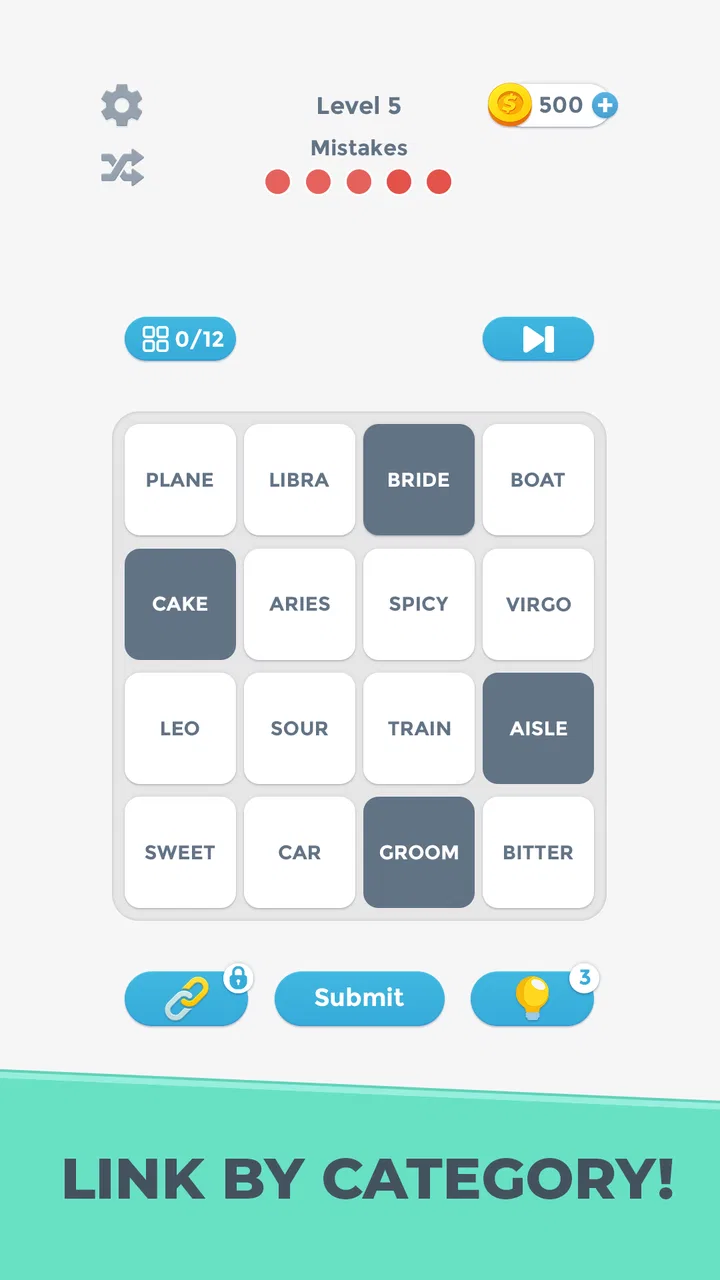
I enjoy trivia games that make me pause before tapping, and Connections Word is built around exactly that kind of hesitation. Instead of asking me to recall a fact or answer a question directly, it presents a word-grouping challenge: I have to spot terms that belong together and separate genuine relationships from tempting near-matches. That makes it a good fit for a short mental break, especially when I want something more thoughtful than a quick reflex game.
My first impression is that the appeal comes from the tension between recognition and doubt. I may see several words that appear related, but the real task is deciding which connection is intentional and which one is a distraction. A successful round feels satisfying because the answer usually depends on noticing a precise theme rather than simply knowing more vocabulary. At the same time, this design means the game can feel stubborn when my interpretation is reasonable but does not match the intended grouping.
Developed by Wixot Games, this free trivia game is aimed at a broad audience and carries an Everyone content rating. It has reached over 100 thousand installs and holds a 4.6 average from around 6.4 thousand ratings, which suggests that the central word puzzle is connecting with many players. The current release is version 1.6.4, and the game is available for devices running Android 7.1 or later.
You May Also Like

 Blood Strike: 2.5 Anniversary
Blood Strike’s Loadouts Turn Every Drop Into a Tactical Gamble
A close look at Blood Strike’s custom loadouts: how fast access to signature weapons reshapes its battle royale rhythm, rewards preparation, and narrows the gap between fights.

 Pandora - Music & Podcasts
Pandora’s Music Is Easy to Start, but Harder to Recover
Pandora’s strength is its low-effort path from a seed to a station. Its weak spot is how much confidence it asks you to place in connection, setup, and quiet recovery.

 8 Ball Pool
 Is Built on Rivalries, Rematches, and Routine
A close look at the rivalries, rematches, shared routines, and unanswered safety questions that turn a quick pool match into a persistent mobile community.

 Samsung Music
’s Quiet Strength Is Playing What You Already Own
Its reach comes less from spectacle than from dependable access to a personal library. That simplicity is both the app’s strongest retention engine and its ceiling.

 AccuWeather: Weather Radar
AccuWeather Review: A Quick, Clear Forecast for Everyday Decisions
For everyday plans, the best forecast is the one you can understand quickly. AccuWeather makes rain timing, radar, and local conditions easy to act on, with a few trade-offs.

 Hill Climb Racing
Why Hill Climb Racing Still Turns Crashes Into One More Run
A tiny car, a bumpy hill and one more upgrade: Hill Climb Racing keeps resurfacing because its simple chaos makes every near-miss feel personal.
More From Our News Desk
View All News


How the word-grouping challenge feels in everyday use
The basic rhythm is easy to understand. I look over the available words, search for possible relationships, and try to form groups that share a topic. The challenge is not just finding a connection; it is finding the correct connection while avoiding words that have been placed nearby to encourage a wrong guess. That structure gives each round a small deduction element rather than turning it into a simple vocabulary test.
I find the game most enjoyable when I treat the board as a problem to investigate instead of rushing to submit the first idea that appears. A word can suggest a category based on meaning, spelling, usage, or cultural association. The strongest-looking group is not always the safest one. Taking a moment to ask what the other words would do if I removed that group is often more useful than staring at the same four terms.
A realistic use case is a short commute or a few quiet minutes after lunch. I can start a round without needing a long explanation, work through the clues at my own pace, and stop once the puzzle has had enough of my attention. It also works well as a light shared activity. Two people can discuss whether a word belongs in one group or another, although disagreements may become frustrating if one player sees a connection that the other considers too broad.
The daily-brain-training angle is understandable, but I would keep expectations sensible. This is a word puzzle, not a full language course or a structured memory program. It encourages attention to categories, ambiguity, and word relationships, yet it does not replace reading, studying, or a more systematic learning tool. I would recommend it for mental stimulation rather than measurable skill development.
Where players are most likely to get stuck
The biggest source of friction is usually not the interface but the ambiguity of language. Several words may appear to share a topic, while only one arrangement fits the puzzle’s intended logic. When that happens, I try to distinguish between a connection that is technically possible and one that is specific enough to define a clean group. “These words can all relate to something” is weaker than “these words clearly belong to the same named category.”
Another common trap is committing too early. If I select a group because it looks obvious, I may remove the flexibility needed to see the remaining relationships. A better approach is to identify a likely group, then test it against the whole board before submitting. If the leftover words suddenly become harder to organize, that is a warning that the first idea may have been a decoy.
Unfamiliar references can also slow progress. A player with a wider vocabulary or different cultural background may recognize a theme immediately, while another player may need to reason from the surrounding words. That does not make the game unfair by itself, but it does affect who will find it relaxing. If you prefer puzzles with one clearly defined answer and little dependence on word familiarity, this format may feel more subjective than you want.
When a round seems impossible, I avoid repeatedly tapping random combinations. Guessing without a theory only adds frustration and makes it harder to remember what I have already tested. I instead write the possible themes mentally, rank them by confidence, and look for the group whose removal leaves the cleanest remaining board. This small change turns a stalled round into a process of elimination.
Setup checks before blaming the game
Because Connections Word is a relatively focused game, the first setup check is compatibility. The listed minimum is Android 7.1, so I would confirm the device version before spending time troubleshooting installation or launch problems. If the phone meets that requirement but the game still behaves unexpectedly, closing it fully and reopening it is a sensible first step before trying anything more disruptive.
I would also check whether the app itself is current. Version 1.6.4 is the current version identified for this review, and keeping the installed build aligned with the available release can prevent avoidable inconsistencies. If an update is waiting, installing it and restarting the device gives the game a clean chance to load again. I prefer this simple sequence because it does not risk losing local settings or other app information.
Storage and connection conditions are worth checking too, particularly if the problem occurs during installation or while content is loading. A device with very little free space can cause ordinary app operations to fail, while an unstable connection can make a working game appear unresponsive. I would test another reliable connection and make sure the phone has room for the installation before assuming the puzzle itself is broken.
The game is free to download, but it includes in-app purchases ranging from $1.99 to $79.99 per item. That matters during setup because I would review purchase controls before handing the device to a child or sharing it with someone who may tap quickly. The Everyone rating makes it suitable for a wide audience, but an age rating does not remove the need for sensible purchase supervision.
I would not clear storage or reinstall as a first reaction to a single frozen round. Those actions can be more disruptive than helpful, especially if the game has information stored locally. A restart, compatibility check, update check, and connection test are safer early steps. If the issue continues across several launches, then a clean reinstall becomes a more reasonable option, provided I am comfortable with the possibility that local progress or preferences may not be preserved.
Recovering a stalled puzzle workflow
When I am stuck inside a round, I use a three-pass method. First, I scan for an unmistakable group and leave anything merely plausible untouched. Second, I examine the remaining words for a shared grammatical form, familiar phrase, or narrower topic. Third, I revisit the first group and ask whether its members are actually more distinctive than the alternatives. This prevents one attractive association from controlling the entire solve.
A useful habit is to separate confidence from curiosity. I may notice an interesting relationship between two words, but two related words do not necessarily make a complete group. I mark that idea mentally as a possibility rather than treating it as evidence. The strongest groups tend to reduce uncertainty elsewhere; after identifying them, the rest of the board should become easier to interpret, not more chaotic.
If I make an incorrect attempt, I use it as information rather than proof that the puzzle is unfair. The failed combination tells me which words should not be treated together in that exact way, even if the broader association remains valid. I then look for a more precise category. This is particularly important with words that can function in several contexts, because the intended answer may depend on a specific use rather than a general meaning.
For players who want to improve, I recommend reviewing the reasoning after finishing instead of immediately moving on. Ask which word caused the confusion and what made the correct group distinct. Over time, this builds a more useful skill than memorizing isolated answers: noticing how categories are framed and how a puzzle uses overlap to test judgment. That is one of the game’s better long-term qualities.
There is also a practical stopping point. If I have been cycling through the same combinations for several minutes, taking a break is usually more effective than forcing the issue. Returning with a fresh view can expose a connection that was hidden by tunnel vision. The game works best as a compact challenge, so treating every difficult round as a contest of endurance takes away some of its charm.
When the app may not be the cause
Not every delay, failed installation, or lost session points to a defect in Connections Word. Older devices, limited storage, background system restrictions, or an unstable connection can all affect how an otherwise suitable game behaves. I would compare the problem with another recently installed app. If several apps are slow or failing, the broader device environment deserves attention first.
Input problems can also be misleading. A screen protector, an unresponsive area of the display, or aggressive touch settings may make a selection appear not to register. Testing a few ordinary taps outside the game can help separate a touch-screen issue from a game-specific issue. If only one area of the board is difficult to select, rotating the device or restarting the app may reveal whether the problem is temporary, though I would avoid inventing complicated fixes without a clear reason.
Purchase-related confusion deserves a separate check. Since the game is free but offers paid items, an unexpected payment may involve the device’s account settings or purchase confirmation process rather than the puzzle screen itself. I would inspect the relevant account history and parental controls, and I would avoid repeating a tap if a transaction appears to be processing. Keeping purchase verification enabled is the most practical prevention for shared devices.
Notifications, battery-saving behavior, and interruptions can affect a short session as well. If the game repeatedly pauses or reloads after switching apps, I would test it with fewer background tasks and a stable battery level before deciding that progress is unreliable. These are general device checks, but they matter more in a puzzle where losing the current arrangement can break concentration.
Players should also recognize the difference between a hard puzzle and a malfunction. If the board accepts selections normally but the categories are difficult to see, that is part of the game’s design. If taps do not respond, the screen closes, or the app repeatedly fails to start, that is a technical concern. Making that distinction helps avoid wasting time trying to “fix” a challenge that simply requires a different solving approach.
Who will enjoy it, and who should choose another format
I would recommend this game to people who like wordplay, category puzzles, and short sessions that reward careful thinking. It is especially suitable for players who enjoy discussing alternate interpretations and do not mind that the first apparent answer may be misleading. The free entry point makes it easy to try, while the Everyone rating keeps the intended audience broad.
I would be more cautious recommending it to someone who wants a conventional trivia quiz with direct questions and factual answers. This is trivia in a looser, word-association sense. It asks me to identify relationships rather than recall a single correct fact. Players who dislike ambiguity, wordplay, or trial-and-error may find a standard quiz game more satisfying.
It is also not the best choice for someone seeking a deep multiplayer experience, a long story, or a highly customized learning plan. Its strength is the compact puzzle loop. Compared with crossword games, it focuses less on filling a grid and more on sorting concepts. Compared with anagrams, it asks for thematic recognition rather than letter manipulation. Compared with general quiz apps, it gives less emphasis to broad knowledge and more to how words can be grouped.
The purchase range is another reason to decide how you want to use it. I can treat the free version as a casual pastime, but players who are sensitive to optional spending should review the purchase settings before playing on a shared account. I would not pay simply because a difficult round is resisting me; the core enjoyment comes from solving, and spending should never replace the reasoning that makes the format worthwhile.
My practical verdict after using the format
Connections Word succeeds because it makes ordinary words feel unstable in an interesting way. I may understand every term on the screen and still need to examine how they interact as a set. That creates a satisfying middle ground between easy casual play and serious brainteasing. The best rounds reward patience, precise thinking, and the willingness to abandon an attractive but incomplete theory.
Its limitations are closely tied to that same design. A broad or unfamiliar category can feel subjective, and a wrong guess may be frustrating when the alternative connection seemed perfectly reasonable. Technical problems should be approached with basic device and installation checks rather than immediate drastic action, while difficult rounds deserve a structured solving method instead of random tapping.
For me, the strongest way to use it is in short sessions: check the device requirements, keep the app updated, protect purchases on shared devices, and approach each board by testing groups against the words left behind. That workflow reduces setup friction and improves the quality of the puzzle experience without pretending every challenge will feel effortless.
If you want a free, focused word-trivia game that rewards noticing hidden categories, this is worth trying. I would skip it only if you prefer direct factual quizzes, dislike ambiguous word relationships, or need a game built around extended progression. For everyone else, Wixot Games has created a compact daily-style challenge with enough uncertainty to make a familiar vocabulary feel surprisingly fresh.
FAQs for Connections Word Game
01What is the main objective of the Connections Word Game?
The main objective of the Connections Word Game is to challenge players to form words by connecting letters on a grid. It's a fun and engaging way to enhance vocabulary and improve language skills. Players need to find as many words as possible within a set time limit, making it both educational and entertaining.
02Is the Connections Word Game suitable for all age groups?
Yes, the Connections Word Game is designed for all age groups. It features multiple difficulty levels to cater to different skill sets, making it appropriate for both children and adults. The game offers a playful yet challenging experience that can be enjoyed by families, students, and language enthusiasts alike.
03Does the game offer any in-app purchases or ads?
The Connections Word Game does include in-app purchases that allow players to unlock additional features, such as extra levels or hints. While there might be ads in the free version, they can be removed through a one-time purchase. This ensures that the game remains accessible and enjoyable for all players.
04Can I play the Connections Word Game offline?
Yes, the Connections Word Game can be played offline, making it a great option for those times when an internet connection isn't available. However, some features, like leaderboards or daily challenges, may require an internet connection to function properly. This offline capability ensures continuous play without interruption.
05Are there any special features or modes in the game?
The Connections Word Game includes several special features such as daily challenges, timed modes, and leaderboards. These features add variety and keep the gameplay fresh and exciting. Additionally, players can earn achievements and track their progress over time, making it a rewarding experience for competitive and casual players alike.
Pros
- Challenging puzzles boost your vocabulary.
- Intuitive interface is user-friendly.
- Regular updates with new levels.
- Offline mode available for travel.
- Minimal ads enhance gameplay experience.
Cons
- Limited hints can be frustrating.
- In-app purchases can be pricey.
- No multiplayer feature available.
- Occasional app crashes reported.
- Some puzzles feel repetitive.

Connections Word Game
Gallery